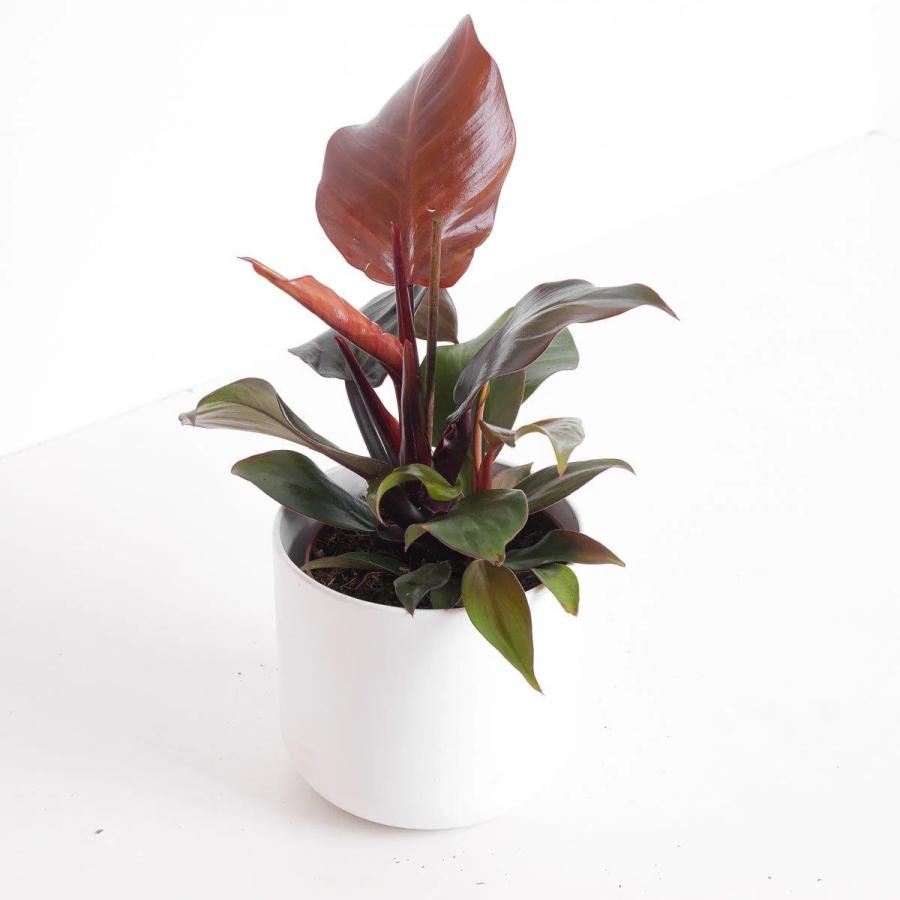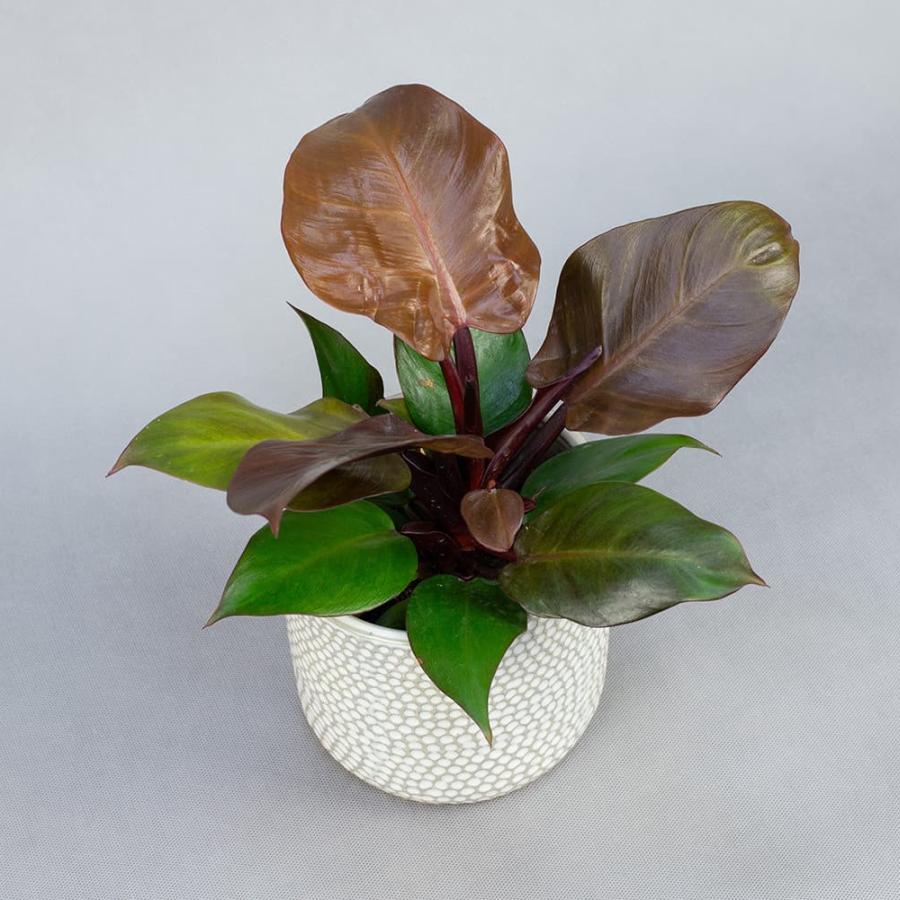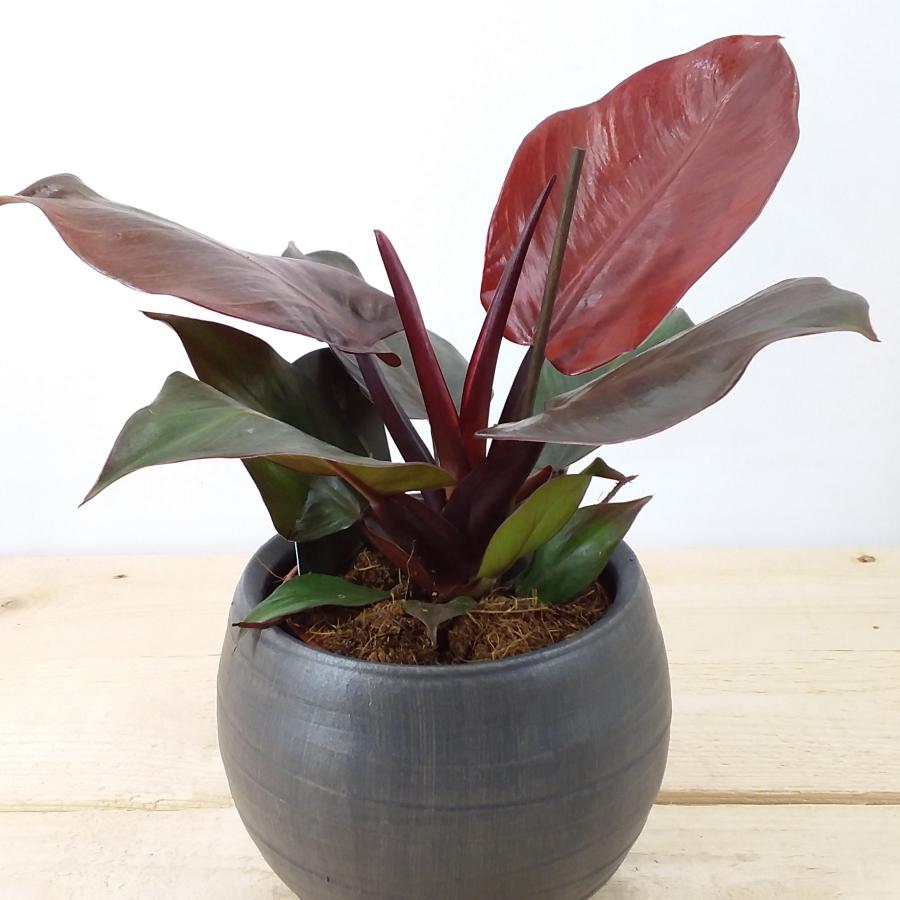
Philodendron is a perennial evergreen plant from the Araceae family, comprising over 800 species. Its native habitat is the tropical forests of Central and South America, and it is also found in Australia and Mexico.
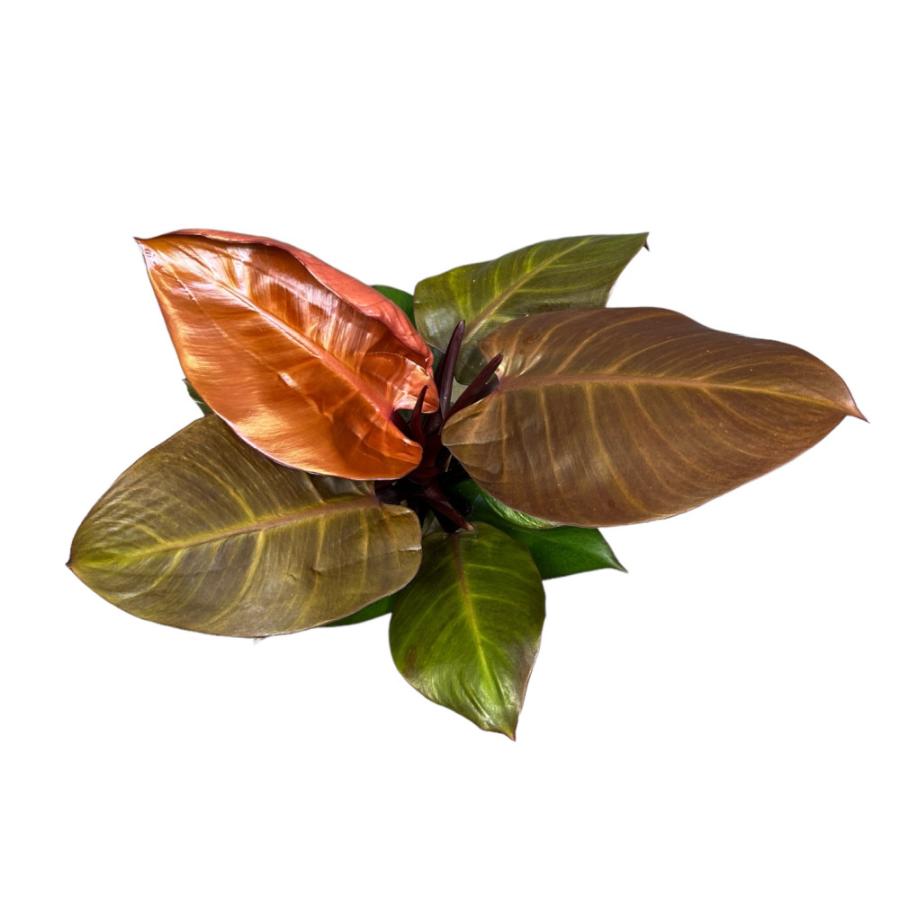
Philodendron ‘Sunlight’ – is a modern hybrid cultivar valued for its compact form and the striking, changing coloration of its foliage.
Young leaves emerge bright red, copper, or orange-red. As they mature, they gradually darken and become glossy dark green with a burgundy tint on the underside.
Care guide
Philodendron ‘Sunlight’ is not only pleasing to the eye but also very easy to care for.
Light
Prefers bright, indirect light. Direct sunlight can burn the leaves, and with insufficient light, new leaves lose their bright red coloration and become dull green.
The philodendron is an ideal plant for bedrooms, bathrooms, living rooms, and spaces that receive less light (away from direct sunlight).
Water
It is recommended to water when the top 2–3 cm (about 1 inch) of soil have dried out. The plant is sensitive to overwatering, which can lead to root rot.
It adapts well to typical indoor conditions but prefers higher humidity (50–70%).
Since the plant originates from tropical forests, it loves high humidity. In summer, it is advisable to spray its leaves 2–3 times a week. Be sure to remove dust from the leaves to allow the plant to breathe better. This also prevents diseases, as the philodendron becomes more susceptible to pests if the air is too dry.
Temperature
The optimal range is from +18°C to +25°C (64°F to 77°F). Avoid letting the temperature drop below +15°C (59°F) and keep away from drafts.
Nutrition
Fertilizing once a month from March to September is sufficient. Use a fertilizer formulated for ornamental foliage plants.
Additional information
The plant is known for its air-purifying properties and can help improve indoor air quality. The plant is also often used in Feng Shui, where it symbolizes prosperity and wealth.
Toxicity
Like other philodendrons, the ‘Sunlight’ cultivar is toxic to humans and pets if ingested.
Repotting
Young plants are repotted in spring before active growth begins; mature plants are repotted once every two to three years.
Care
This plant is easy to maintain, but it grows slowly. Do not worry if a long time passes before you see new leaves; this is normal. The development of new leaves is always a sign that the philodendron is happy.
Gallery